I had this idea to write about finding your voice. Initially, I thought about asking artists that I think have unique “voices.” But then I thought, wouldn’t it be better to find out why some people use their voice and others don’t? That suddenly seemed more a question about the psychology of voice.
I turned to Denver therapist Nancy Goodman. I’ve known Nancy for years and have always liked her take on life and healing, especially her approach to trauma. Here’s how she describes her practice: “the marriage of psychology and spirituality creates the strongest fabric for our healing and growth. Change based solely in psychology is like a tapestry with only horizontal threads. It can lead to a “well-adjusted” person who still feels empty or alone or lacks meaning in his/her life. Change based solely in spirituality, like a tapestry with only vertical threads, can lead to a person with sound ideals and principles, but without the resilience to handle life on life’s terms.”
The following is an edited version of our conversation. As soon as I find time, I promise to put the recorded version up online. But for now, here it is.
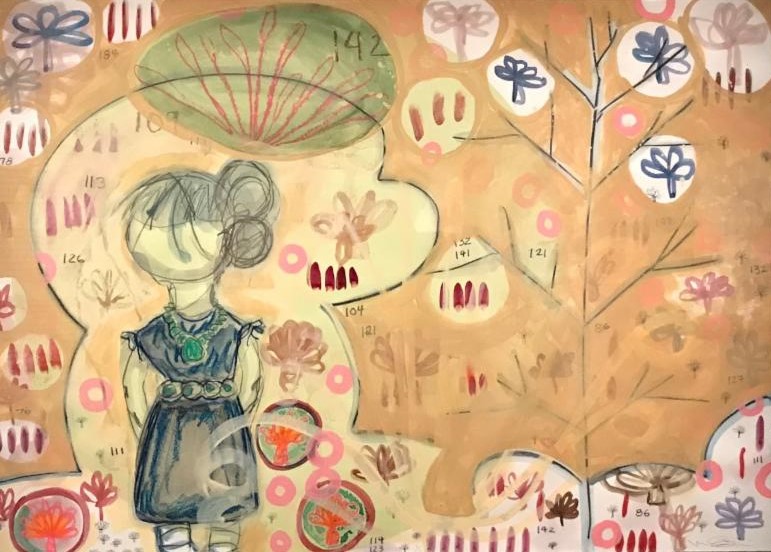
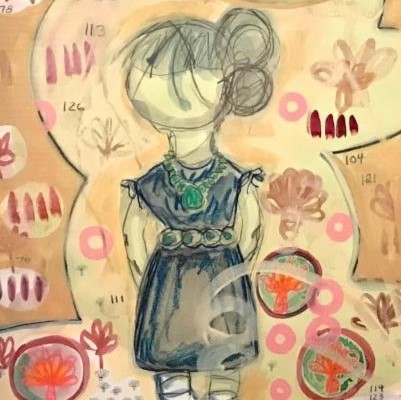
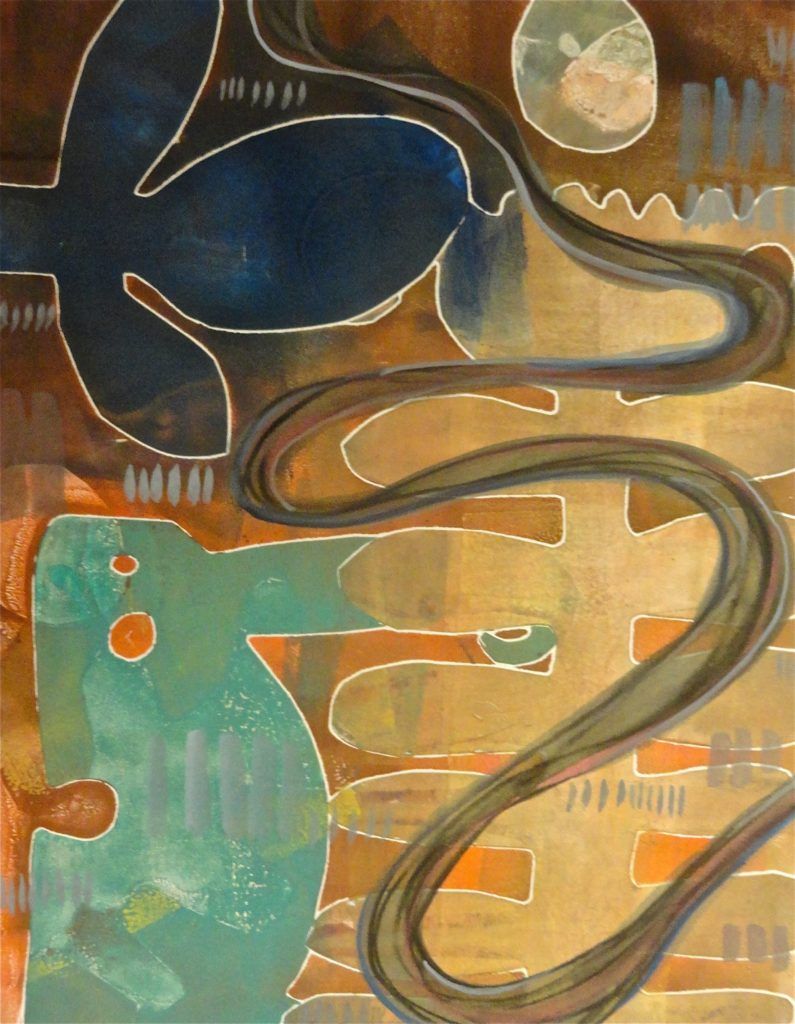
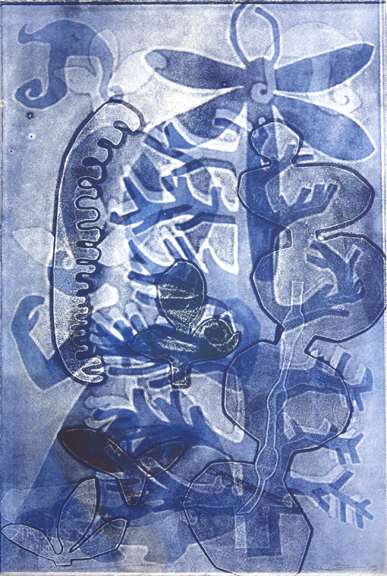
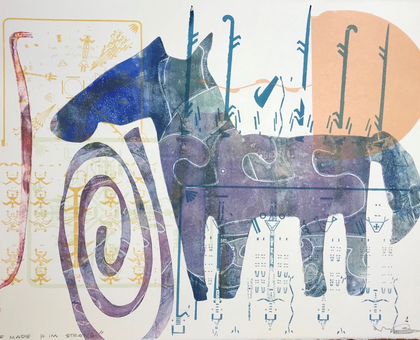
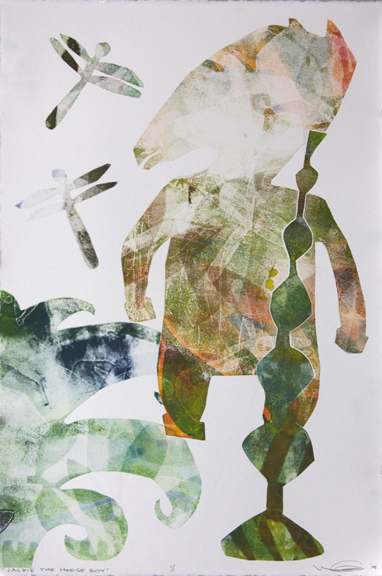
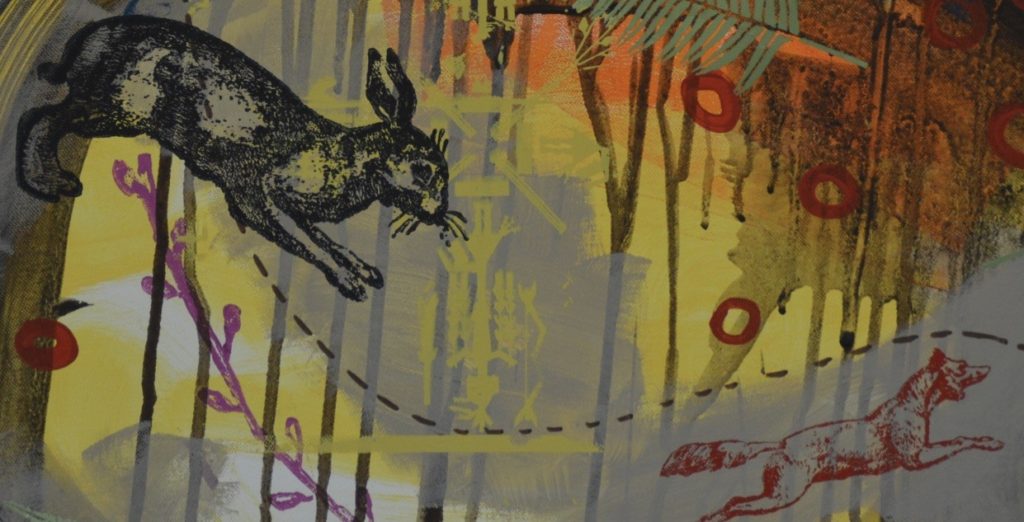
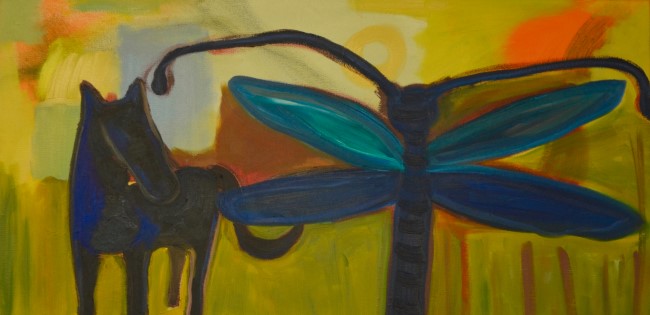
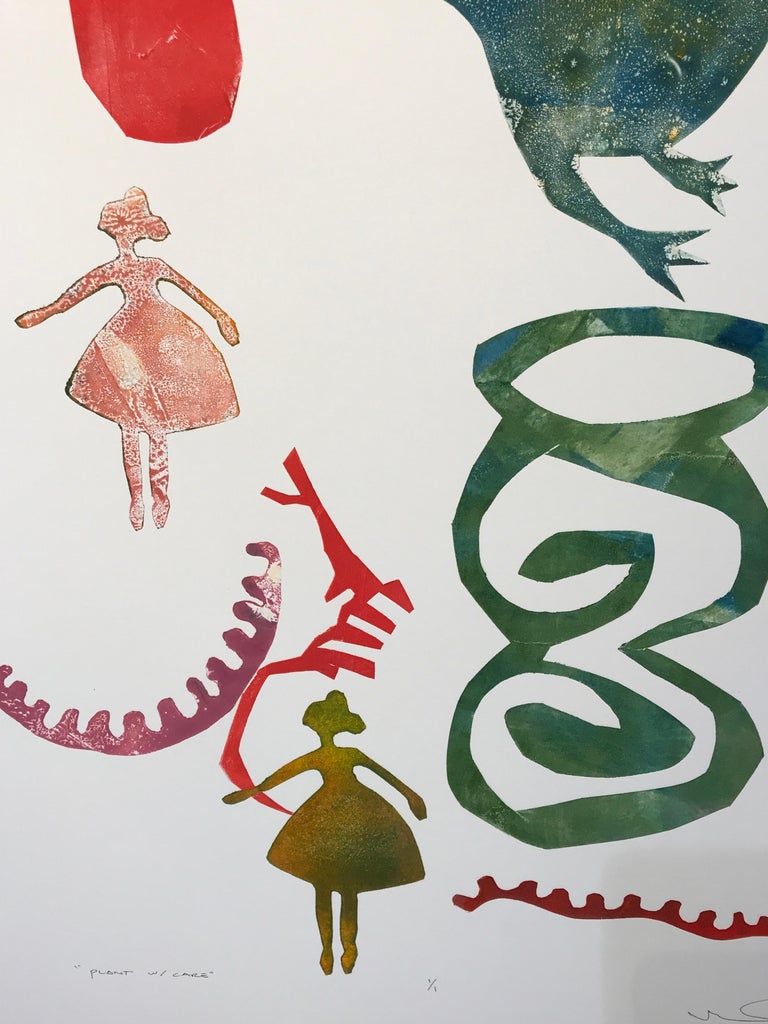
I also want to thank my dear friend Melanie Yazzie, who I refer to in this interview, for allowing me to use her images throughout. -Rose
YOU TALK PLENTY
ROSE: OK, so let’s talk about Voice.
NANCY: Let’s.
ROSE: I loved it when I sent you those questions, and then all of a sudden you riffed off all these amazing thoughts about voice and emailed it back.
NANCY: Yeah, that was fun.
ROSE: So, when I was thinking about this, I was struck with an epiphany: I haven’t been using my own voice. And I think when I say that to people, they’re like, “Oh, I hear you loud and clear,” right?
NANCY: You talk plenty.
ROSE: You never stop! And, who knows where it comes from—our youth and everything that society has told us, especially women, you know: “that sounds angry.”
NANCY: Dial that down.
ROSE: Exactly, dial it down, back it off, and put a smile on it.
NANCY: Right. You look prettier if you smile.
ROSE: Right, right. And so, you lose your voice in a way. You talk, but you stop vocalizing what you really want to say. I’m wondering, as a therapist, is this something that you see often?
NANCY: As I’m listening to you talk about it right now, the thing that comes to me is this: There’s a difference between talking, which our culture says women do too much of and using our voice, which is a much more authentic expression of ourselves. Anybody can talk. Anybody can say anything. A lot of times we talk just to fill the silence, impress people. There’s a lot of ways we talk, but using our voice is a completely different conversation altogether because that comes from an authentic place. But, when we look outside ourselves for how we’re supposed to sound to the world, there’s nothing authentic about that.
I think your question was, is this common? And yeah, I think it’s common. I mean, I know more about how this shows up for women than I do for men. I think white men are not squelched. I think people of color, both genders, have a lot more risk when it comes to using their voice. It’s just not safe—not as safe. But I know most about women and that it’s a pre-programed cultural expectation that women sound like this and not like that, whatever that may be, depending on your family and your upbringing.
ROSE: Let’s talk a little bit more about the notion of being pre-programmed. Because it sounds great to tell people to just say what’s on your mind, say what’s in your heart. But it’s not that easy. So, what are all these factors that we’re dealing with?
NANCY: Ultimately, it probably gets down to that human-based fear of public ostracization, rejection, abandonment. If I say the wrong thing or sound the wrong way or offend somebody or overwhelm somebody or scare somebody or don’t appease, don’t make somebody else feel comfortable, then I’m at risk for rejection, for anger, for violence, not getting that job, not getting invited to that party, upsetting my husband or partner.
ROSE: When I was initially thinking about voice it was because, in the art community, there’s always this conversation about finding a voice. That’s really at the heart of this. What are some things that can help when your voice is being tamped down? How do you reach in and get your voice?
NANCY: I think that the first part of that is, how does that happen? How does it get tamped down when you’re in the process of learning a craft? It’s similar to being brought up in this culture. There’s a message that there’s a right and a wrong way to do things. As a writer, I can say that learning the craft and learning the art of writing are two very different paths. Learning the craft—some instructors say to take your favorite books and write the first couple chapters by hand so that you get the rhythm of your favorite authors. That is one way of learning: to watch other people who’ve been practicing it for decades.
If artists are learning how to express themselves, they first learn how to use paint or clay or a pen and paper, and how to put words in the sentence and how to put sentences together. Then they can launch themselves from there and say, now that I know how to use the tools I have, how am I going to use them to express things the way that I want to express them? And so, then the risk in being creative is that people will judge it.
TELLTALE SIGNS
ROSE: Let’s talk about that, the fear. It’s really a fear. I know in my life, I’m that quintessential middle child, always wishing: can’t we just get along? But then I am exhausted by the end of this trying to get along when what I’m really trying do is politely escape but I’m afraid to say anything. It’s draining.
NANCY: You use the word draining. Which is a pretty late stage realization that you haven’t been expressing yourself for hours, days, years. It is exhausting not to be authentic. It’s a good internal checks-and-balances. If what I’m saying is energizing to me, it’s a good sign that I’m being authentic. And if what I’m saying is draining to me; it’s really draining our life force energy to not be in alignment with ourselves. So that’s a good indicator. If I’m depleted by the end of the conversation from not expressing myself and might get resentful, I might get bitter and might get judgmental. I might get depleted. If I’m not expressing myself, I might feel fear. I can feel lonely.
ROSE: You and I talked about when we don’t use our voice that there can be a backlash.
NANCY: Women who don’t use their voices will find the backlash of that somewhere in their lives. Health problems, taking it out on their bodies via eating disorders, staying in abusive relationships, lack of understanding of or ability to practice self-care, depression, anxiety, despair, poor parenting, projection of judgment onto other women.
When women specifically aren’t using their voices, they have to ask: what is the cost to me? Is the bitterness and resentment or depletion and exhaustion taking its toll on my body because it’s an incredibly stressful way to live. Blocking our authentic voice is stressful on our bodies and often sometimes traumatic, depending on the situation: being in an abusive relationship, or dealing with an abusive boss or a really unhealthy workplace, and exacerbating the problem by staying in a situation where using my voice is not accepted and then taking it out on others.
You see women not using their voice but then criticizing and judging all women who, for example, stay home rather than work or vice versa. Or criticizing all women who wear tight clothing. So, projecting my own self-limiting behavior onto other people and then judging them for that.
Shit rolls downhill. If I’m not using my voice, I’m depleted, so my children aren’t getting from me what they could if I were more authentic.
When we are not using our voices, we feel like victims. When we feel like victims, we continue to be victims. Somewhere in there the tide has to turn where we say, it’s my job, it’s my responsibility to use my authentic voice to benefit myself and everyone around me and because if I can’t use my voice, I will stay stuck in that forever.
GROUNDING
NANCY: I just need to say this to get this one off my mind. You mentioned earlier, doing what everybody else is doing gives us a sense of belonging. That’s an important starting place because when we’re talking about self or when we’re talking about using our voice, that’s a self-actualization skill. And we need to feel like we belong before we’re able to arrive in that self-actualized place. There’s value in belonging. First, there’s value in learning the craft before we branch out on our own because then we have this foundation of “I know what I’m doing. I know who I am. I know where I stand.” It’s like orienting ourselves in the world. I’ve grounded, or oriented myself in the world first, which is a good, solid foundation. Then to express myself authentically, which is risky and scary, it’s like jumping off. So that belonging, I think, has its place.
ROSE: I like that. First things first: get grounded.
NANCY: Yes! So, the bigger my foundation is, the farther I can wander before I feel like I’m going to fall off the edge into the abyss. If my foundation is big and I know my craft and I know my mentors and I know my community and it’s a large enough, then I have lots more room to wander around and explore my own authenticity and find what works and doesn’t work for me personally. So, there’s value in that belonging phase first, and then you have the freedom to start saying, “Who am I as a writer? Who am I as a painter? Who am I?”
Once you recognized that you’re not using your voice, that what you’re doing is depleting or stilted or tedious, tiresome, that it’s causing resentment, it’s causing self-doubt and all of that, you can start taking risks and saying, “If nobody’s looking, what would I want to write about or paint?”
It’s our own experience of authenticity that starts to build on itself. The momentum starts to go, because when we painted the thing that we really wanted to paint, as crazy and weird and unlike what we were taught, it feels amazing and freeing. It feels right. It feels joyful. You would rather be feeling those things. I think it takes time to be willing to choose that over what is expected of us.
THE BOGEYMEN: PERMISSION AND SELF-DOUBT
ROSE: I want to come back to self-doubt and permission and talk about how those two things fit together or fight against each other, and how we can reconcile them.
NANCY: Permission, I think, comes both internally and externally. It’s lovely to get permission from the outside. It really, really helps. And if you have a choice between two mentors, I would go with that one who’s going to give you permission to explore on your own because that external permission is really freeing.
Internal permission is a choice. I have to be willing to give myself permission to be who I am in the world, and I think we do that incrementally. We dip our toe in the water.
And self-doubt. So, I’ve come to a place in my travels where I believe that self-doubt has a very small, important role. It’s a checks-and-balances sort of thing. It’s what makes me look outside before I decide whether or not to put on a coat; I have enough doubt to make me look outside. It’s just this tiny little voice, saying, Are you sure?
But if self-doubt is allowed to get any bigger than it should be, which is tiny, than it takes over and it causes all kinds of pain and suffering.
If self-doubt doesn’t lead immediately to new information, then it’s taking on way too much control of our lives. If self-doubt makes me say, you know what, I’m not sure if that’s the right word, let me go look it up in the thesaurus, then it’s useful. If self-doubt says, I don’t know if this story is any good; that’s subjective. I’m not going to get any new information from that line of thinking.
ROSE: OK, so how do we get past that, especially in the beginning phase where self-doubt probably stops more artistic endeavors, you know?
NANCY: Sometimes it can be helpful to have a conversation with the part of us that we could name “self-doubt.” Get a little bit of distance from it and ask, why are you here? Where’d you come from? When did you show up in my life? Was I two? Was I ten, or twelve? And why? Oftentimes, if we can get back to where that self-doubt is rooted, we can start to have compassion for its role in our life.
If it showed up on the scene when I was four, let’s say, because I got laughed at in preschool and it was traumatizing, and self-doubt came on the scene to make sure that never happened again. It’s now second guessing everything I do socially in order to keep me from ever getting laughed at again.
Go back and ask, how familiar is self-doubt to me? How old does it feel? And why did it start? Where did it come from? And then thank it: You got me through preschool. I never got laughed at again. You were clearly successful. Thank you, but I’m actually in charge now. I’m the adult in charge of this body, this person and I want to write this story whether it’s good or not. Doesn’t matter. I want to write the story. I want to paint this picture. I want to build this thing that I’m excited about, so I need you to take a step back. What will it take for you to settle down? What do you need from me, Self-Doubt, for you to settle down so that I can go write this story?
Well, Self-Doubt might say, I want to make sure you don’t show it to anybody until it’s really, really good. OK, I promise not to show it to anybody until I’ve edited it three times. How’s that? Or, I want to make sure that you don’t put this painting on the wall of a coffee shop where people might laugh at it and nobody’s going to buy it. And that’s going to mean X, Y, and Z. Okay, I promise I won’t put it on the wall of a coffee shop until we know for sure that people like it. How’s that? Once it settles down, then you go paint your picture, you go write your chapter.
ROSE: I was listening to Brene Brown who was talking about creativity and how hard it is for adults. She said she lost count of how many people told her that an elementary school teacher said something that crushed them like, “that is a terrible drawing of a horse” or whatever.
NANCY: My kindergarten teacher told me that suns are not supposed to be in the corners of the page with the little lines on them, because it looks like a spider crawling off the page. That’s the last time I drew a sun like that.
ROSE: I had a teacher, I think it was second grade, and I wrote this little story that I was proud of, you know, and she circled all of my misspellings in red ink and then on one in particular, wrote, “Not even close.” We remember these things, right? I can’t tell you the name of the teacher. I don’t know what she looked like. I just know that the message was: you did this wrong; you’re a terrible speller.
NANCY: And, after that people think, now I won’t ever do that again because I’m broken, so I will stop. That’s just so unfortunate. Because, like we were saying in the beginning of the conversation, it’s not that everybody has a painter inside them or a novel inside, right?
ROSE: Exactly. Which is why I love that idea of being able to talk to self-doubt, really, and confront it instead of letting it own you. And to have some compassion for why it’s there in our lives.
NANCY: We all have some form of it, self-doubt. But when it’s really big and really loud, to be able to have a relationship where we can be in charge instead of it and by attending to its needs because it’s not going to stop protecting us. If we don’t think we need protecting, it’s going to get louder, it’s going to rage up hot and stronger, out of self-protection. But if we say, look, I got this, I’m the adult here, I’m in charge, I’m using my brain, I know how to make my way in the world. What do you need to calm down? It will tell us.
CRITICS, CRITICS EVERYWHERE
ROSE: So that’s the critic inside you. Then, we have the feared critic outside of us. Even a spouse or family members. And, you know, some family members love everything you do, and to me, that’s almost more damaging because it’s like, well, now I just don’t trust you.
NANCY: That’s right.
ROSE: And then there are the ones who criticize everything. I think they mean to be helpful, like self-doubt. How do you get over that fear of external judgment?
NANCY: Let’s just say there’s going to be external dogma. And so, getting to a place where that expectation is realistic—I’m waiting for my parents to die because they will disown me if I write my memoir, or they will be horrified, or they will lose their standing in their own community—that’s a choice that we have to take ownership over.
Am I going to let this external judgment sway my decision to use my voice or not? And if the answer is yes, then my fear will sway my decision to use my voice. But if we own the choice, then it’s no longer self-doubt. It’s a proactive, life affirming decision.
If we are afraid of critics’ judgment, not necessarily family but stranger’s judgment, we can ask the same question. Am I going to let my fear of critics keep me from using my voice in my art and in my life? And if the answer is yes, then you have to ask, is that a value judgment or is that fear? And in that sense, it’s probably fear because you don’t ultimately know what people will say. They may love it, right?
As we know, art and self-expression are subjective. If you line up ten people, it’s guaranteed, some people are going to love it and guaranteed some people are going to hate it. And guaranteed some people aren’t even going to notice it. Do you want to base your actions and your connection to your own authentic voice on the guarantee that some people are going to love it? I promise you; some people are going to love it. So, go ahead; it’s just a choice.
And that is another way to be in touch with our authenticity. I authentically want to create something regardless of the external reaction. I authentically want to create something, but I don’t want to shame my parents. I authentically want to create something, and my parents are responsible for their own feelings. I’m going to go ahead and get it published. It’s all just a personal choice, but I think there’s a lot of empowerment in coming to terms with your choice.
ROSE: Yes.
NANCY: Just facing it allows it to shake out, sort of dulls the pain of it.

ROSE: I was talking to a friend, Native American artist Melanie Yazzie. She was telling me about how, early in her career, she was angry, and her work was angry; it was expressing this anger about her situation and everything she was dealing with. But she realized that the people who were angry with her were already with her and the people she wanted to connect with, they simply walked away, saying, “Oh, she’s just another angry Native.” So, she realized she needed to figure out how to say something that the people who walked away would hear, because she wanted to communicate.
NANCY: “I need to express this anger” and “I want to communicate”—those are both authentic drives that transform over time.
ROSE: Yes, yes. And so, she worked on that but then she had to deal with people who criticized her work saying things like, that looks like a child could do it, or I could have done that. So, Melanie started telling those people, “You should do it then.” And she even said, “Here are the supplies I used. When you’re done, will you please send it to me, and we’ll talk about it.” And she’s tells people this in a totally authentic way, not in a snide way at all. She’s actually had people try to paint then contact her and say, “Oh, that was a lot harder than I thought.”
NANCY: I think that that’s a good illustration of how connected she is to her voice. She’s not doing that to prove anything. She’s not doing anything for acceptance. She’s not doing it for people to say you’re amazing.
ROSE: Exactly. Because when somebody says you’re not that good, she says, “I’m not trying to be, but you could be. And I would love it if you were.”
NANCY: That ability, that generosity of spirit, in my opinion comes directly from a true connection to our authenticity.
ROSE: I agree. And I think that’s something that she embodies completely. And then to have people say to her, that was a lot harder than I thought. What they’re realizing is: I can copy something all day long, but if you need me to express what’s inside of me, that’s a whole other ball of wax.
LIKE-HEARTED PEOPLE
ROSE: Something we’ve talked about with the external critic is having a support system, a community.
NANCY: I’ve been hearing recently people calling those types of communities not “like-minded” people, but “like-hearted” people. Like-minded means we all think the same way, which has its place, but like-hearted people are the ones who are going to feel safe. It doesn’t matter what you’re using to create. What matters is that we’re both looking for authentic voices or we’re both pushing each other to our edges. These are the callings of our heart.
And to find people who feel like they speak your heart language, that authentic voice, they may have very different voices, they may be writers and you’re a painter, they may be loud, and you’re introverted—that part doesn’t matter. It’s the level of authenticity. How safe do they feel within themselves? And how safe do you feel within yourself? And can you find people that match that? And then you can just let go in front of those people you can express yourself and feel like you have a safety net. Because ultimately, I think, what art is doing is speaking universally, right?
ROSE: I was remembering, as you said that, of standing in front of a Jackson Pollock painting, and thinking, I don’t know what’s going on here, but I can’t leave.
NANCY: Yes. That authentic voice is something that we connect to.
ROSE: When you go through that experience and you put the work out there if it’s writing or poetry or singing, or whatever your art is, and just have that one person come up and say, that that was good.
NANCY: It shuts up the inner critic.
ROSE: And it’s so important because there’s that thinking that maybe I’m doing the wrong thing because my sales have slowed way down. Is it just a bad time economically or have you lost touch with your authentic voice? You’re the only one who knows the difference between the two.
NANCY: I think there’s a lot of encouragement to be found in this authentic voice realm to completely let go of the outcome. It’s not about the outcome for artistic expression and individual expression. It can’t be about the outcome because, once it’s out of our mouth, it’s being received in ways that we have no control over. And it may not be the time for our words or our vision to land with people. But that’s not our business. Our business is simply the expression of it. And then we let it go.
THE JOURNEY IS THE ART
ROSE: It makes art the journey.
NANCY: And you’re expressing your journey at this particular moment in time. And what a blessing for the world to have a vision or a picture of your individual journey at this moment in time. And the ripple effect that happens to whoever it touches, whoever gets to learn from your experience! It’s such a gift for human beings to learn what it’s truly like to be you.
ROSE: And in that, learning to understand what it’s like to be themselves.
NANCY: That’s right. Yes. Because we’re so social and we’re mirroring each other and reflecting off each other. I know more about me in relationship to you than I know about me when I’m by myself. And so, if you tell me your story, I’m going to hear it through my ears. And if it’s authentic, I’m going to hear the juiciest, biggest gift you can give the world: telling me about you.
ROSE: Well, and then give you permission to tell your story if you want.
You know what? I think we have this this huge movement going on right now with a lot of people standing up to be heard, really heard, like we haven’t seen since the sixties. I feel like it’s just been such a great thing for a lot of people—and artists—to finally be able to breathe. To have African American artists telling their story through their art, that culture living alongside the American white culture. It’s so beyond my second-grade teacher telling me I couldn’t spell. This is being able to express your voice after generations that have been told, No, we’ve heard enough of you, even before they’ve had the chance to speak. So, my question is: how do you uncover that? Because, in some cases, it’s like PTSD.
NANCY: I love the fact that there have been so many white people who are metaphorically handing the microphone over to people of color. As if saying, our voices been heard, you know what the majority culture’s opinion is, we’re done talking. The pendulum needs to swing in the other direction before it can find a nice balance, which will come in time, I assume, because that’s how nature works. But right now, the pendulum needs to swing. And we need to ask, what has this been like for you? We are ready to shut up now.
ROSE: When you do hand the microphone over and somebody starts telling you a story through their eyes and you see that, for instance, a traffic stop isn’t the same for every person. But, you know, people don’t believe these things are really happening. I would think that adds to the trauma.
NANCY: One of the most powerful ways to heal trauma—and I need to qualify this because it’s not going to single-handedly heal trauma—but a really powerful part of the process is to tell the story over and over and over. The more people of color as a culture are telling the story, the more power they’re going to have over it.
When we tell the story over and over, it doesn’t heal it like there’s no trauma. Trauma lives in our bodies. And so mentally and cognitively, using words to tell the story doesn’t touch the trauma that lives in our bodies; that is a completely different topic. But there’s so much power in owning our experience and then being able to express our experience. Telling our story is an incredibly powerful thing to do. And the more that people who have been traumatized can tell their story, the more that heals to a degree. And it has an incredible collective healing as well.
We all have such limited views on the world. None of us have the 360-degree view of it all. None of us have reality all figured it out. But each of our individual slices of the pie are valid and valuable and nourishing for the people to get this perspective. And when you see from that perspective, when we put both of those together, we’re both benefiting from a greater perspective of what reality looks like.
THE YIN AND THE YANG OF IT
NANCY: There was one other thing that keeps coming into my mind. When it comes to creating authentic work and expressing yourself authentically, I think there’s a beautiful truth to the idea of holding the masculine and the feminine at the same time.
The feminine is the creative part but it’s messy and formless. It’s the energy of creation. The masculine is what holds the form together. The masculine is the craft. The feminine is art. The masculine is the words we choose, and the feminine is the emotional impulse behind the desire to write that sentence. The masculine is the canvas and the colors of the paint, the feminine is the picture that evolves through the process of that painting.
When we’re not allowing the masculine to hold its rightful place in our work than it becomes that toxic masculinity, which is critical and judgmental, and self-doubt gets riled up by all of that. But if we allow the masculine energy to be the form of our work, and if we can identify the masculine and feminine parts of the artistic expression, we can allow the rightful place for both of them.
And if we can identify where my creativity is and where my form is in this process than we’re allowing that masculine-feminine energy to completely support what we’re doing. And it then clears the way for authenticity.
ROSE: How do you get them back into balance if one takes over?
NANCY: I’m not so sure how this fits with other art, but with writing you have to just create first with no form. It’s all feminine. It’s all creation. And then bring in much more of that masculine energy and start editing it and forming it. And so, it’s not always that they’re both happening at the same time. It’s that I’m using them the way that they are meant to be used in their optimal ways. And when I do that, my authenticity is more free flowing.
ROSE: The artist Wayne Thiebaud said that you have to do ten paintings so you can throw nine away.
NANCY: Yes, and the first nine are the feminine, the tenth one is the masculine.
TELL YOUR STORY, FIND YOUR VOICE
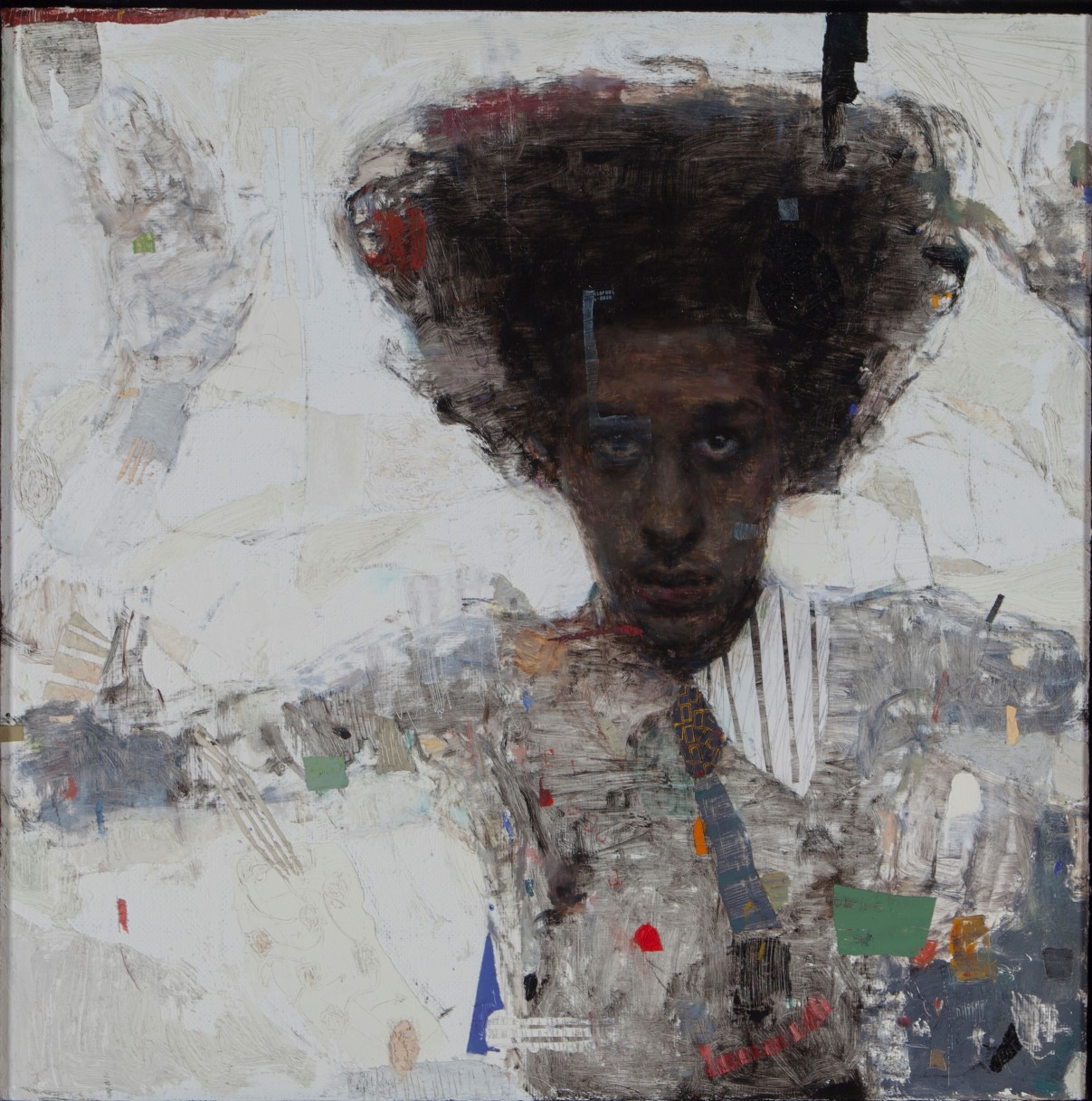
ROSE: To circle back around to authenticity and voice, it seems that what we’re talking about, ultimately then, is storytelling. From Melanie Yazzie’s Native American paintings that people have said were childlike to Motherwell’s big black color field paintings and the Jackson Pollock’s drip paintings or hyper-realism paintings or photography, it’s telling a story. And it’s the artist’s voice coming through.
NANCY: And it goes back to all the things that we were talking about. Find that support to convince the critic inside of you. Don’t tamp down the critic; parent the critic—I’m the adult here, and you’re the one struggling. How can I help you?
ROSE: And give yourself permission.
NANCY: Yes, to go down that path, you really do have to talk to that inner critic because nobody is going to be good at throwing a pot the first time they try. No one’s going to be good at writing a novel the first time. And most people don’t do these creative things without community support. Whether it’s a passage in a painting or a passage in your writing, you need the support to bring your voice out. Find the people who really want you to share your voice.
But, if your goal is the outcome of selling “x” number of pieces of your work, then you’re missing the point. The point is self-expression and self-expression is an ongoing process. The outcome doesn’t matter, whether they sell or not. It doesn’t matter. Whether it’s appealing to other people or not doesn’t matter. Self-expression is a thing in and of itself that has nothing to do with outcome.
It’s the journey.